Help get safer tech solutions on the Massachusetts ballot:
Help Get Safer Tech on the Ballot
Support our initiative petition because we all need:
- Safer Technology
- Someone to Speak for the People and the Trees
We can support safer access for all:
Make Safer Simple to See:
Support an Office of Research and Technology that examines & shares how to make technology safer, or, if impossible, sidestep it entirely.
Support Safer Tech Experts:
Tech is hard to understand, fix, analyze, and control. We need experts on the side of the public working to analyze tech impacts on civil liberties, health, safety, environment, and the economy.
Start with a Single Focus (for now)
Because Massachusetts requires 1 subject only for petition initiatives, this petition focuses on non-ionizing radiation. The framework allows evaluation of privacy aspects (e.g. tracking location), economic impacts, energy costs, due process, security issues, property rights, safety, disability rights, public and environmental health, etc.
Protect through Transparency & Solutions
This office would share solutions with the people and our state government to allow individuals and our government to make better choices. These independent experts would also be able to provide expert testimony in court, in support of safer technology, and research existing emissions and impacts.
We need funds. Please donate. Last year, there were 4 lawyers fighting our petition. This year, there will be more because this framework, this petition, has greater potential to shift law and society. They will attack our legal filing, which will require a lot of legal analysis, removing time for organizing. They may attack us personally.
Core Problem with Wireless + Tech EMF Emissions
- Fighting Powerful Interests: Interests in money or control have trumped common sense. Wireless & fields from electricity need common sense regulations, instead of the current free-for-industry deregulation and profits at public expense.
- Wireless Tracking: Constant wireless emissions allow intensive data collection through tracking, besides real time interface with our data. Smart utility meters not only share intensive personal data from our homes, but do so wirelessly which is easier to hack than wired systems.
- Remote Real Time Spying: Wireless allows spying remotely in real time. In one report, a utility worker spied on a woman he was supposed to avoid by court order.
- Wireless AI: AI mobility or robots (mobility requires powerful wireless) are possible through wireless connectivity – we need to independently assess the full impact since industry refuses to share risks and pushes this tech.
- Cyber Attacks: Wireless is less secure than wired systems, yet our utilities intensively utilize wireless. So do many other sensitive systems.
- Wireless Communications Suck: Wireless communications are much more expensive; disasters for privacy, security, and reliability; pinnacles of monopoly; yet, our taxes are given away for wireless systems instead of maintaining our public wired lines. Independent experts could help assess and compare options.
- Electric/ Electronic Property Damage: Utilities & other industries save money with cheap design that creates powerful & unsteady electromagnetic fields (EMF) – poor power quality, as industry calls it, can reduce the life time of electronic appliances. This same power power quality can also cause errors in utility bills and digital diagnostics, which is why hospitals have filters for better power quality. Solar installations can wreak havoc on household refrigerators, etc., and if installed need serious filtration and regulation.
- Energy Costs: Did you know wireless uses more energy than the use of wires? Each generation of wireless has used more energy than the last. Energy costs are up, and yet our communication systems demand extremely high energy use, instead of being designed to use less or knock out trivial signals.
- Environmental Harm: The list is so long – studies even show the very soil loses fertility from man-made non-ionizing radiation and that even the frequencies used determine effect. There is a short list here.
- Concentration of Wealth, Resources, & Monopoly: Wireless allows replacement of workers with AI, but also laws require small business to adopt monopoly technology that is costly. Proposed federal laws for wireless tags (traceability) on every farm animal & farm technology could penalize small farms with extra costs, harm farm health, disrupt productivity as shown by research–and the entire concept of wireless ‘precision agriculture‘ harms sustainability and, through new cyber threats, security.
- Insanely High Exposures to Fields from Electricity: Large-scale alternative energy leads to uniquely high electric and magnetic field exposures in the oceans, streets, and sidewalks where the large cables run. Chronic three (3) milligauss exposure (non-ionizing radiation fields from electricity) has long been recognized as a trigger point that childhood leukemia cannot survive. Yet, cables from massive alternative energy cables reach 500 milligauss or more and run alongside homes and streets. These are never before now exposures for large numbers of people. This is not regulated.
- Insanely High Exposures to Wireless: Yes, cell towers were once known to cause poor health and increase illness within the surrounding 2 miles. Now, we all carry cellphones will higher exposures than old style cell towers, plus, we have new cell towers on utility poles, with devastating power density levels. Since around 2005 our wireless exposures have just kept shooting upward where no man has gone before. And people are showing it with the symptoms reported in the research literature of headaches, poor health, trouble concentrating, etc.
- Homelessness & Property Devaluations: A cell tower next to a home destroys property value, and leads to more sick people and homelessness. Some don’t know what hit them, but are sick. So many fight cell towers and lose. Some win. Our proposal would allow these independent experts to share research and non-ionizing radiation field findings as experts in court to support safer technology–right now, this kind of expertise is hard to get for regular people because independent experts have less time and money to help, and can’t always work for free.
- Due Process: Federal law states that cell towers can’t be denied based upon environmental health. Courts say this includes public health. The Massachusetts supreme court just ruled that the Massachusetts has to go along with this rule – that public and environmental health can be set aside despite evidence of property devaluation, homelessness, and sickness that occurred in an entire neighborhood upon construction of a cell tower. Others have found smart meters can impair pacemakers and yet it is just pricey and unreliable to get smart meters to stop transmitting. Where is the respect for life? We need a view of how many people are being hurt, to end the censorship that protects the few profiting from harming the community.
- 6G & the ‘Internet of Bodies’: 6G proposes wireless in our bodies – such as digital pills, pacemakers, or Elon Musk’s infamous brain chips tested on so many poor animals one has to wonder how he doesn’t seem to mind. 6G brings a host of risks such as hackability, failures, even brain & body system control. Yet, laws can be designed to shield industry, downplay harm, and fund experimentation. Plus, private employers could even require invasive 6G technologies of their employees–unlike government, private employers have not been required to allow employees all rights and freedoms. We need experts on our side to analyze & critique to recommend that technology is safer & ethical, or dumped.
- Wireless Weapons: Wireless military weapons are terrifying. Some people call them directed energy weapons. How can we prevent misuse?
- Remote Control: Wireless connectivity allows remote control of our home appliances, stoves, cars, heating, etc. The ease of turning off heat remotely has been abused by some utilities. Remote control can be used to cause harm by malicious actors.
- Health is fundamental: Independent research links wireless & other electromagnetic exposures (EMF) to impaired well-being, cancer, reproductive troubles (men & women) and more. [See our case series here.]
- Ignored by Politicians: Residents have repeatedly reported sudden harmful effects from electromagnetic tech, yet our state & federal government have failed to protect the vulnerable, e.g., women, children, and future generations. The FCC seeks to eliminate & preempt any state control and annul industry liability, even as exposures have shot through the sky due to denial, new technologies, & regulatory failures.
- Censored by Technology…: Search engines promote paid links, so industry can promote itself through its wealth and conceal critique. AI appears to begin with spin, promoting industry first and shifting opinion only if made aware that you disagree.
- No Exit: Reducing exposures & avoiding other negatives of wireless technology is expensive, complex, and increasingly impossible.
Hidden Solutions Exist:
Federal law or jurisdictional authorities prevent mandating changes, but laws can change and people can choose to prefer safer choices. This law would help find more solutions – some ideas already exist:
- π¨βπ Monitoring, Research, & Advice: We need monitoring of non-ionizing radiation – and research, legal & policy analysis.
- π Safer & Less Tech: Government could support access to safer options, including options for less tech.
- π Drastically Reduce Signals: Recommend systems to transmit minimal data, instead of sending wireless signals every minute, and to provide offline operations wherever possible.
- β‘ Safer Power Lines: Monitor utility companies and corporations regarding fields and other electromagnetic exposures.
- π The Right to Free Opt-Out: Recommend every homeowner has a zero cost option to decline wireless smart utility meters.
- βοΈ Accountability: Where possible, we could identify where industries need to change or be held accountable. A nice one would be to support criminal liability for utilities that allow a smart meter system that disrupts pacemakers and causes health issues, especially since financial penalties simply shift to ratepayers.

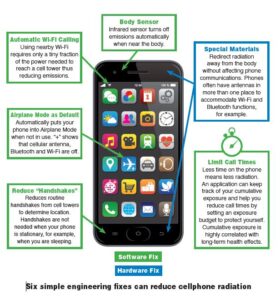
‘Cell Phone Radiation Exposure Limits and Engineering Solutions’

CAMPAIGN UNDER CONSTRUCTION. Please bear with us while we make changes for our safer tech campaign, including flyers, posters, etc. Remodeling is in process.
Timeline of Petition Initiative
This Massachusetts ballot initiative requires collecting 74,574+ certified voter signatures from mid-
September through November 17, 2026 (Round 1) and may require a second round May to June 2027. A strict rule requires voters to only sign petitions specifically designated for their hometown. Volunteers can participate by gathering signatures, hosting petition sheets, or assisting with the organization and submission of documents.
2026: Round 1
- From Now On: Mobilize & Publicize for Volunteers, Infrastructure, & Support
- Aug. 5: Submit a Signed Proposed Law (Initiative Petition) to Attorney General
- Distribute Printed Petitions: Collect and Distribute Printed Petitions with Instructions (c. Sept. 7-18, 2026)
- Sept. 14: Start Signature Collection & Submission to Town Clerks
- Nov. 17, Tuesday: Finalize all Signatures
- Nov. 18, Wed. (before 5 PM): Last Day to Submit Signatures to Town Clerks for Certification (Round 1)
- Dec. 2, Wed.: Give 74,574+ Certified Petitions to the Secretary of State in Boston
2027: State Legislature Vote
- 4 May Tuesday 2027: Last Day for State Legislature to Vote to Pass Petition Initiative without 2nd Round
2027: Round 2 (If State Legislature Fails to Pass)
- May 5, 2027: If not Passed by State, Request New Printed Petitions
- Round 2 Signature Collection: Collect 12,429+ Signatures & Submit to Town Clerks
- June 23, 2027, Wednesday: Last Day to Submit Signatures to Town Clerks for Certification (Round 2)
- July 7, 2027, Wednesday: Last Day to Submit 12,429+ Certified Signatures to Secretary of State in Boston
2028: People’s Vote on Ballot Question
- November 14, 2028: Massachusetts’ voters decide whether to pass the proposed petition for a law through a ballot question.